Home » Knowledge Management Dierectorate

Knowledge Management Directorate

Knowledge Management Directorate (KMD)

About KMD 

Knowledge Management (KM) refers to the systematic process of generating, capturing, organizing, sharing, and applying knowledge to improve decision-making, learning, and performance. In research institutions, KM ensures that scientific knowledge does not remain fragmented or underutilized but is effectively managed throughout its lifecycle, from research generation to dissemination and use. Knowledge Translation (KT), as a core component of KM, focuses on transforming scientific evidence into accessible, relevant, and actionable products for policymakers, practitioners, and other end users. Through formats such as policy briefs, evidence syntheses, guidance notes, and stakeholder dialogues, KT bridges the persistent gap between research findings and real-world application. Together, KM and KT enhance scientific impact, defined as the extent to which research influences policies, programs, practices, innovation, and population health outcomes beyond academic publications alone.

Globally, research institutions are increasingly expected not only to generate high-quality scientific evidence but also to demonstrate measurable societal and policy impact. Scientific impact is realized when research findings inform laws, policies, strategies, clinical guidelines, and development programs. Effective knowledge management and knowledge translation systems are therefore essential to ensure that investments in research lead to tangible benefits for society and contribute meaningfully to national and global development goals.

The Armauer Hansen Research Institute (AHRI) is one of Ethiopia’s leading health research institutions, producing extensive biomedical, clinical, public health, and implementation research. Despite strong research outputs, experience indicated that scientific evidence was not always optimally synthesized, translated, or utilized by decision-makers and implementers. To address this gap and strengthen the research-to-policy and research-to-practice continuum, AHRI established the Knowledge Management Directorate (KMD) in 2018. The Directorate was created to institutionalize knowledge management and translation functions, enhance the accessibility and usability of research outputs, and maximize the scientific and societal impact of AHRI’s work.

In 2023, the Knowledge Management Directorate was restructured in alignment with Regulation No. 530/2023 and evolving national and global priorities. The restructuring strengthened integration, multidisciplinary collaboration, and strategic focus. The Directorate is currently organized into three interdependent divisions: the One Health Research Division, the Data Management and Data Science Division, and the Knowledge Translation Division. While each division has a distinct mandate, they operate in a highly integrated manner, jointly contributing to research generation, evidence synthesis, data management, and effective knowledge use. Through this coordinated approach, the Knowledge Management Directorate strengthens institutional learning, promotes multisectoral collaboration, and enhances the scientific, policy, and societal impact of AHRI’s research at national, regional, and continental levels.

Mission of the Directorate

The Knowledge Management Directorate at AHRI is committed to maximizing the impact of research by transforming scientific evidence into accessible, timely, and actionable knowledge through knowledge translation and evidence synthesis. The Directorate advances One Health research by promoting integrated approaches that address the interconnected health of humans, animals, and the environment, and strengthens data science and data management systems to ensure high-quality, secure, and usable data across the research lifecycle. By bridging research, policy, and practice, fostering institutional learning, and promoting the effective use of scientific knowledge, the Directorate supports evidence-informed decision-making. It contributes to improved health outcomes in Ethiopia and beyond.

Vision of the Knowledge Management Directorate

To be a leading center of excellence in knowledge management, One Health research, and data-driven health innovation, recognized nationally, regionally, and globally for transforming scientific evidence into actionable knowledge, advancing integrated human-animal-environment health solutions, and enabling evidence-informed policies and practices that improve health outcomes for communities in Ethiopia and beyond.

Values

  • Scientific Excellence Upholding the highest standards in research, data management, evidence synthesis, and knowledge translation.
  • Professionalism – Demonstrating integrity, accountability, and ethical conduct in all activities.
  • Collaboration and Partnership – Building strong local, regional, and international partnerships to maximize research impact and knowledge sharing.
  • Teamwork and Multidisciplinarity – Fostering coordinated, cross-disciplinary approaches to address complex health challenges.
  • Evidence-Based Decision Making Ensuring that all outputs, analyses, and recommendations are objective, unbiased, and grounded in rigorous evidence.
  • Resource Stewardship Utilizing financial, human, and technological resources efficiently and sustainably to support strategic priorities.
  • Community-Centered Impact Engaging stakeholders and communities meaningfully to ensure research and knowledge translation meet local health needs.

Duties & responsibilities from Regulation 530/2023

In accordance with Regulation No. 530/2023, the Knowledge Management Directorate (KMD) of the Armauer Hansen Research Institute (AHRI) is mandated to generate, manage, and apply scientific knowledge to improve health in Ethiopia. The regulation establishes AHRI’s mission and specifically outlines responsibilities related to knowledge management, research utilization, and evidence-informed decision-making, which guide the Directorate’s duties and operations.

  • Article 1 – One Health Research: The Directorate is tasked with coordinating and promoting One Health research, addressing the interconnected health of humans, animals, and the environment. This emphasizes multidisciplinary, multisectoral approaches to public health challenges.
  • Article 3 – Strengthen Knowledge Management, Data Synthesis, and Dissemination: The regulation mandates the Directorate to establish and strengthen knowledge management systems, ensure systematic data synthesis and utilization, and disseminate research findings widely through publications and other communication channels. This ensures that research outputs are accessible, actionable, and inform policy and practice effectively.
  • Article 4 – The Directorate is required to prepare and submit policy briefs to relevant government bodies based on research evidence, facilitating evidence-based decision-making. In addition, KMD is responsible for establishing a data repository and conducting bioinformatics studies to accelerate drug discovery and contribute to scientific innovation in Ethiopia.

Through these mandates, the Knowledge Management Directorate is empowered to:

  1. Institutionalize knowledge management and knowledge translation systems.
  2. Strengthen data management, data science, and analytics to maximize research utilization.
  3. Promote One Health research and multisectoral collaboration.
  4. Engage policymakers, practitioners, and communities to ensure research relevance and uptake.
  5. Support innovation through bioinformatics and traditional medicine knowledge systems.

Strategic objectives/goals from AHRI’s Strategic plan

The Knowledge Management Directorate at AHRI aims to maximize the impact of research through the systematic management, translation, and application of knowledge. In line with AHRI’s strategic plan, the Directorate has established the following strategic objectives:

  1. Institutionalize knowledge management and knowledge translation systems:
    Develop, strengthen, and sustain institutional knowledge management systems to capture, organize, store, and disseminate research outputs effectively. Promote knowledge translation mechanisms to ensure that scientific evidence is accessible, timely, and actionable for policymakers, practitioners, communities, and other stakeholders, thereby maximizing the use of research in policy formulation, program planning, and practice.
  2. Strengthen data management and data science capacity:
    Establish robust data governance and management systems to ensure high-quality, secure, and interoperable research and programmatic data. Advance data science approaches, including analytics, modeling, integration, and visualization, to generate meaningful insights that inform research, surveillance, and decision-making processes at both institutional and community levels.
  3. Advance one health research integration:
    Promote integrated, multidisciplinary, and multisectoral research addressing the interconnected health of humans, animals, and the environment. Facilitate collaboration across health, agriculture, and environmental sectors to produce evidence that informs one health policies, strategies, interventions, and community-level programs at national, regional, and continental levels.
  4. Enhance evidence use, scientific impact, and community engagement:
    Strengthen mechanisms for translating research into practice and policy to increase the uptake and impact of AHRI’s scientific outputs. Engage communities actively in research design, dissemination, and application to ensure that evidence is relevant, culturally appropriate, and responsive to local needs. Monitor and evaluate the influence of research on health policies, programs, and community health outcomes, ensuring knowledge contributes meaningfully to societal and national development goals.
  5. Promote institutional learning and capacity building:
    Foster continuous learning within AHRI and among partner institutions by building capacity in knowledge management, knowledge translation, data science, one health research, and community engagement. Support training, mentorship, and communities of practice to enhance organizational knowledge and scientific expertise.
  6. Facilitate Strategic Partnerships and collaboration:
    Strengthen collaborations with government institutions, universities, research organizations, development partners, and regional and global networks to promote knowledge sharing, data harmonization, community-driven research, and joint research initiatives. Leverage partnerships to expand the reach, relevance, and uptake of AHRI’s research outputs and knowledge products.

Programs/initiatives/projects/Research Thematic Areas

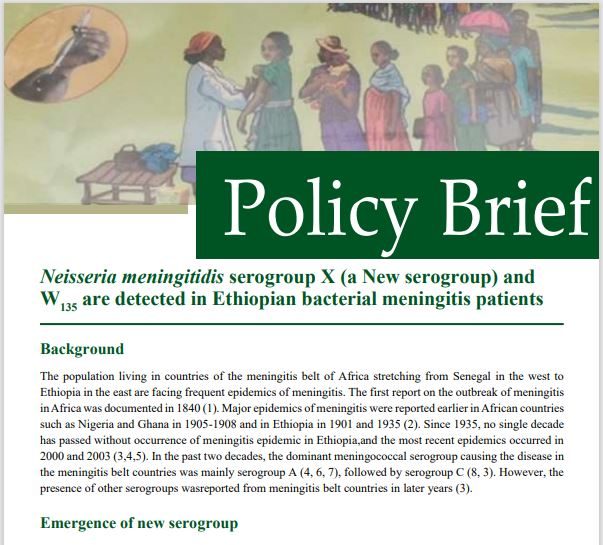
The Knowledge Management Directorate (KMD) at AHRI plays a central role in translating research evidence into policy and practice. The Directorate develops policy briefs and issue briefs and submits research outputs to the Ministry of Health and other relevant stakeholders. It has also developed a Knowledge Management Guideline and works closely with universities, research institutions, and the Regional Health Bureau–led health research consortia to promote evidence-informed decision-making. Key activities include evidence synthesis, systematic reviews, meta-analyses, and the documentation and dissemination of research outputs.

The Directorate is actively engaged in One Health research and implementation through various projects and programs. Thematic areas include:

  • Integrated human-animal-environment disease surveillance and response systems, including community-based human and animal health services supported through community-based health insurance.
  • Cross-border zoonotic disease surveillance and response, including interventions for food safety and food-borne zoonoses. Specific initiatives include milk quality assessment, milk-borne disease monitoring, camel milk processing, community-based meat processing by pastoral women cooperatives, and abattoir hygiene and disease surveillance in pastoral areas.
  • Operational research on zoonotic diseases affecting humans and animals, such as brucellosis, rabies, Q fever, Rift Valley fever, anthrax, echinococcosis, fasciolosis, cryptosporidiosis, and TB/BTB.
  • Socio-environmental assessments for zoonotic and environmental health risks, including wildlife health, conservation health, entomology, climate change, water and sanitation, and water-borne disease monitoring.
  • Focus on vulnerable populations, including migrant communities, and linking conventional medicine approaches to strengthen holistic health interventions among pastoralist communities.
  • Antimicrobial resistance (AMR) surveillance and research in zoonotic pathogens and food-borne diseases to guide interventions and inform policy.
  • The Directorate leverages data science and advanced computational approaches for integrated data management, analytics, modeling, and evidence generation. This includes using large-scale datasets for disease surveillance, predictive analytics, and operational research to support both One Health and policy-relevant decision-making.

In the area of knowledge translation, the Directorate ensures that research evidence is synthesized, packaged, and disseminated effectively to policymakers, practitioners, communities, and other stakeholders. Community engagement is a key component of all research initiatives, ensuring active stakeholder participation from project initiation, through implementation, to project close-out and dissemination of results.

Through these initiatives, the Knowledge Management Directorate strengthens research-to-policy and research-to-practice linkages, enhances the scientific, societal, and health impact of AHRI’s research, and fosters multisectoral collaboration to address complex human, animal, and environmental health challenges in Ethiopia and the region.

Services in line with the service taxonomy in Institutional Reform of AHRI(IRA)

The Knowledge Management Directorate (KMD) provides a comprehensive set of services aligned with the IRA service taxonomy, spanning evidence synthesis, health research policy support, data management, community engagement, and integrated One Health research. The services are organized into key categories as follows:

  1. Evidence Synthesis Services: Conducting evidence synthesis to inform health policy, programs, and practice.
  • Supporting systematic reviews and meta-analyses to generate high-quality, actionable evidence.
  1. Health Research Policy Support Services: Supporting the Ministry of Health (MoH) and other stakeholders in health research policy development and uptake.
  • Translating research evidence into policy-relevant products, including policy briefs, technical guidance, and evidence summaries.
  1. Community Engagement and Stakeholder Involvement Services: Designing data collection systems and supporting their digitization to improve research efficiency and quality.
  • Ensuring data management and data quality assurance throughout the research lifecycle.
  • Applying advanced analytics, modeling, and visualization to inform evidence-based decision-making.
  • Providing statistical support, from protocol development to publication.
  • Facilitating data access, sharing, and governance services in line with ethical and regulatory standards.
  • Conducting training and capacity-building in data science, digital systems, and research methodologies.
  • Enhancing community engagement in health research through participatory approaches.
  • Facilitating stakeholder participation at all stages of research—from project initiation to implementation and dissemination.
  1. Knowledge Management, Archiving, and Documentation Services: Archiving research outputs and institutional knowledge to ensure long-term accessibility.
  • Documenting and disseminating research findings to support policy, practice, and institutional learning.
  1. Health Research Services Using an Integrated One Health Approach: on zoonotic and environmental diseases using an integrated One Health framework.
  • Providing research support on zoonotic diseases affecting humans, animals, and the environment.
  • Offering advisory services for the control of zoonotic disease outbreaks.
  • Providing consultancy services on One Health policy and strategy development.
  • Delivering training on disease surveillance, prevention, and control methods using an integrated One Health approach.
  • Offering technical advisory and consultancy services for students and researchers conducting One Health studies.

S. No

Staff Name

Permanent

Contract

Qualification

Division

1

Dr. Akililu Alemu

y


PhD

Director

2

Mrs. Eskedar Amenshaw

y


(MPH, Division Head)

Knowledge Translation


3

Mrs. Bizunesh Sintayehu


y

MSC

4

Mr. Minyahil Tadesse


y

(PhD student)

5

Mr. Yeabsira Alemu

y


(Assistant researcher)

6

Mr. Sitotaw Akililu

y


(PhD student)

7

Mr. Dawit Getachew

y


MPH

8

Dr. Tsegaye Hailu


y

(PhD), Division head,

Data Science


9

Wondu Wagaye


y

MSc

10

Edome Girma


y

MSc

11

Elisa Mulata


y

MSc

12

Hana Kalile


y

BSc

13

Zenebech Assefa


y

BSc

14

Mitin Wondefew


y

BSc

15

Yordanos Sintayehu


y

MSc

16

Tigist Beyene

y


MSC

17

Wude Wale

y


BSC

18

Dr. Gizachew Gemechu

y


DVM, MSc

One Health

19

Dr. Rea Tschopp


y

Division Head

20

Samson Abebe

y


PhD student

21

Dr. Ashenafi G/Giorgis

y


DVM, MSc, PhD cand

22

Tadesse Shiferaw

y


MPH

23

Ayele Bizuneh

y


DVM, MPH

24

Mahlet Osman

y


MSc, PhD cand

25

Metasebia Tegegn: MSc,

y


PhD cand. Expertise

26

Kalkidan Melaku


y

BSc

27

Endalkchew Girma

y


MSC

Budget by source

From 2021 to 2025, the Knowledge Management Directorate (KMD) at AHRI managed a total budget of approximately USD 58,222,107 from all funding sources. The Directorate is supported through multiple streams to ensure sustainable operations and the implementation of strategic initiatives. The regular budget comprises core institutional funds allocated by AHRI to cover routine operations, staff salaries, and priority activities, in alignment with Regulation No. 530/2023 and the Institute’s strategic plan. Grant funding is secured from international partners, including the Free State of Bavaria and the Bill & Melinda Gates Foundation, to support competitive research, knowledge translation, capacity building, and targeted projects. Additional resources from SDG-linked funding and development partners, such as the World Bank, enable the Directorate to advance One Health research, strengthen data science and management systems, enhance knowledge translation, and implement community engagement initiatives, thereby maximizing the impact of AHRI’s scientific outputs on policy, practice, and population health outcomes.


Partnerships

Local Partnerships

The Knowledge Management Directorate (KMD) at the Armauer Hansen Research Institute (AHRI) maintains an extensive network of strategic partnerships within Ethiopia to strengthen research excellence, knowledge translation, and policy impact. These collaborations include public universities such as Jigjiga, Haramaya, Jimma, and Bahir Dar Universities; Regional Health and Agriculture Bureaus (including Afar and the Southern Nations, Nationalities, and Peoples’ Region); the Ethiopian Wildlife Conservation Authority (EWCA); the Armauer Hansen Institute (AHI); the Ethiopian Public Health Institute (EPHI); and established Demographic and Health Surveillance Sites. Through these partnerships, KMD promotes multisectoral and multidisciplinary research, strengthens institutional and human capacity, and supports evidence-informed decision-making at national and sub-national levels.

International Partnerships

At the regional and global levels, KMD engages in strategic collaborations with universities, research institutions, non-governmental organizations, and government agencies. Key partners include the African Population and Health Research Center (APHRC) in Kenya, the Wellcome Trust, the Bavarian State/Free State of Bavaria, and international organizations such as PACISA and Malteser. In addition, KMD collaborates with universities in Hargeisa and Goli, as well as the Ministry of Health of Somalia, to support cross-border research, knowledge exchange, and regional One Health initiatives. Through these international partnerships, the Directorate enhances research capacity, advances data management and knowledge translation, and promotes integrated approaches to human, animal, and environmental health across borders.

Achievements

The Knowledge Management Directorate of AHRI has made significant contributions through directorate-specific and collaborative programs, initiatives, and projects, strengthening Ethiopia’s health research capacity and promoting evidence-informed decision-making. In collaboration with higher education institutions, regional health bureaus, and international partners, the Directorate has advanced research, knowledge translation, capacity building, and community engagement, ensuring alignment with national and regional health priorities.

1. Partnerships

1.1 Universities

AHRI has established formal partnerships and Memoranda of Understanding (MOUs) with universities across Ethiopia to promote collaborative research and capacity building:

  • Southern Ethiopia: Hawassa University, Wachamo University, Arba Minch University, Wolaita Sodo University
  • Central Ethiopia: Addis Ababa Science and Technology University, Adama Science and Technology University, Madda Wollabu University
  • Eastern Ethiopia: Samara University, Haramaya University, Dire Dawa University, Jigjiga University, Kabir Dhara University
  • Southwest Ethiopia: Bonga University, Mettu University, Gambella University, Jimma University
  • Northern Ethiopia: University of Gondar, Bahir Dar University, Debre Birhan University

1.2 Regional Health Bureaus and Institutes

Partnerships have been established with Central, Amhara, Oromia, and Somali Regional Health Bureaus, Regional Public Health Institutes, and Demographic and Health Surveillance Sites, creating opportunities for joint research, capacity building, and evidence-informed decision-making.

1.3 International Partnerships

International collaborations with the Wellcome Trust, Bavarian State/Free State of Bavaria, and African Population and Health Research Center (APHRC, Kenya), as well as NGOs and universities in the region, have strengthened Ethiopia’s integration into global health research networks and enhanced the impact of AHRI’s research.

2. Research Focus Areas: Regional Health Research Priorities Identified

The Directorate conducts research in priority thematic areas, including:

  • Communicable diseases: TB, HIV, HCV, HPV, and other infectious diseases
  • Non-communicable diseases
  • Traditional medicine research and product development
  • One Health research: integrating human, animal, and environmental health
  • Antimicrobial resistance (AMR) and zoonotic diseases
  • Environmental and food-borne disease surveillance

Regional Research Roadmaps have been developed in collaboration with universities and regional health bureaus, providing structured frameworks for research aligned with local health priorities, such as the roadmap created in Eastern Ethiopia.

3. Key Research and Operational Achievements

3.1 Knowledge Management and Evidence Translation

  • Developed and institutionalized the Knowledge Management Guideline to strengthen evidence use and learning across AHRI.
  • Submitted and led research initiatives on mHealth, leprosy, bCPAP, leishmaniasis, podoconiosis, lymphatic filariasis, AMR, early childhood development (ECD), malaria, and COVID-19 (including an in-house diagnostic assay).
  • Conducted 11 systematic reviews published in reputable peer-reviewed journals.
  • Established five regional Health Research Consortia (North, Central, South, Southwest, Eastern Ethiopia) to enhance collaboration and research impact.
  • Contributed to the development and alignment of national and continental research priorities and knowledge management guiding documents, promoting harmonized approaches to evidence generation, synthesis, and use across Africa.

3.2 One Health and Zoonotic Disease Research

  • Conducted human-animal-environment disease surveillance at the community level in the Somalia region, linked to regional health and livestock bureaus, enabling joint outbreak responses (e.g., rabies, anthrax).
  • Implemented cross-border collaborations with Somaliland and Somalia on zoonotic diseases and TB.
  • Tested brucellosis control interventions in pastoral areas of Afar, identifying Brucella melitensis as a major cause of miscarriages among pastoral women.
  • Conducted Rift Valley fever surveillance in Eastern Ethiopia, confirming serological exposure but no active circulation.
  • Assessed gaps in integrated surveillance of echinococcosis, fasciolosis, and rabies in Jimma.
  • Constructed an abattoir in Gode and established pastoral women cooperatives for meat processing.
  • Conducted community awareness campaigns and trained community members, laboratory staff, and regional teams on zoonotic disease surveillance and prevention.

3.3 Capacity Building and Training

  • Organized health research training programs to build research skills among faculty and students.
  • Strengthened institutional capacity for evidence-based health research and promoted collaboration between universities and regional health bureaus.

3.4 Operational Research and Data Management

  • Implemented digital data capture and real-time analysis for approximately 40 ongoing research projects.
  • Conducted assessments of health needs among Eritrean refugees in Afar, including infectious diseases, sexual and reproductive health, mental health, and non-communicable diseases.
  • Supported policy advocacy, including policy briefs and strategies for JOHI activities in the Somalia region.

Challenges encountered and actions taken to challenge the challenges

The Knowledge Management Directorate has faced challenges including limited and competitive funding for knowledge translation research, with most grants prioritizing primary research; constrained access to essential software and delays in procuring high-performance computing infrastructure; and retention of highly skilled technical and data staff. Field operations, particularly in remote pastoral areas, have been affected by local security issues, slow customs clearance of reagents, and financial systems that do not fully accommodate unexpected field expenses, sometimes placing a burden on staff or students. To address these challenges, the Directorate leverages institutional and partner funding to support knowledge translation, borrows critical software and equipment temporarily, adapts field schedules to ensure safety, and works with partner institutions to cover unforeseen costs, while building staff capacity and sharing expertise across projects to maintain operational continuity.

Future Prospects (2026–2030 and beyond)

Looking ahead, AHRI will focus on strengthening its role as a leading health research institute through the following strategic priorities:

Enhance Partnerships

    • Deepen collaborations with local, regional, and international institutions.
    • Foster multidisciplinary partnerships to broaden research scope and impact.

Conduct Regional Research Activities

    • Expand priorities-based and community-level research initiatives.
    • Address region-specific health challenges through targeted studies.

Strengthen Community Engagement

    • Increase involvement of communities in health research design and implementation.
    • Build trust and ensure research outcomes are relevant to local needs.

AHRI Visibility and Research Impact

    • Promote AHRI’s contributions through conferences, publications, and media outreach.
    • Position AHRI as a thought leader in global health research.

Promote Evidence-Informed Decision Making

    • Translate research findings into actionable policy recommendations.
    • Support governments and stakeholders in adopting evidence-based health strategies.

Establish the AHRI Journal

    • Launch a peer-reviewed journal to showcase AHRI’s scientific output.
    • Provide a platform for regional and international researchers to publish.

Policy Impact Assessment

    • Systematically evaluate the influence of AHRI’s research on health policies.
    • Identify gaps and challenges to strengthen future policy engagement.

Develop AHRI Research Repository

    • Create a comprehensive repository of scientific documents, publications, and outputs.
    • Ensure open access to research findings for wider dissemination.

Digital and Data Science Advancement

  • Expand the use of AI and predictive modeling to address national health challenges.
  • Develop a full-scale digital research ecosystem with interoperable systems.
  • Strengthen national data governance architecture.
  • Enhance bioinformatics and computational biology capacity.
  • Establish regional leadership in digital and data-driven biomedical research.

Consolidate Achievements and Scale Up Operations

  • Strengthen cross-border collaboration in zoonotic disease surveillance.
  • Expand the directorate’s staff to include specialists in environmental and ecological health.
  • Implement targeted projects, including the milk surveillance project (Norad) in Central Ethiopia, 2025–2027, and the fascioliasis project with Lancet Hospital, 2025–2026.

Request for Collaboration

In line with the mandate of the Armauer Hansen Research Institute (AHRI) to generate, synthesize, and translate high-quality health evidence for policy and practice, the Knowledge Management Directorate seeks to establish and strengthen collaborations with both local and international partners. These partnerships will focus on evidence synthesis, knowledge translation and management, and the evaluation of policy and programmatic impact, with the aim of enhancing evidence-informed decision-making at national, regional, and global levels. Through multidisciplinary and cross-institutional collaboration, AHRI endeavors to strengthen research capacity, promote the effective use of evidence in health policy and practice, and contribute to improved health outcomes across diverse settings.

Publication

2023/24

  1. Bacterial profile and antimicrobial resistance patterns of infected diabetic foot ulcers in sub-Saharan Africa: a systematic review and meta-analysis (https://doi.org/10.1038/s41598-023-41882-z)
  2. Adherence to evidence-based implementation of antimicrobial treatment guidelines among prescribers in sub-Saharan Africa: a systematic review and meta-analysis(https://doi.org/10.1186/s40545-023-00634-0)
  3. Surgical System Efficiency and Operative Productivity in Public and Private Health Facilities in Ethiopia: A Cross-Sectional Evaluation. https://doi:org/10.9745/GHSP-D-22-00277
  4. Surgical Capacity in Public and Private Health Facilities After a Five-Year Strategic Plan Implementation in Ethiopia: A Cross Sectional Study. https://doi:org/10.5334/aogh.3871

2022/23

  1. Uptake of cervical cancer screening and its predictors among women of reproductive age in Gomma district, South West Ethiopia: a community-based cross-sectional study(https://doi.org/10.1186/s13027-022-00455-x)
  2. Prevalence of Group B Streptococcus maternal colonization, serotype distribution, and antimicrobial resistance in Sub-Saharan Africa: A systematic review and meta-analysis(https://doi.org/10.1016/j.jgar.2023.02.004)
  3. Individual and Social Level Factors Influencing Repeated Pregnancy among Unmarried Adolescent Mothers in Katavi Region—Tanzania: A Qualitative Study(https://doi.org/10.3390/children9101523)

2021/22

  1. Male partners’ participation in birth preparedness and complication readiness in low-and middle-income countries: a systematic review and meta-analysis(https://doi.org/10.1186/s12884-021-03994-0)
  2. Prevalence and antimicrobial susceptibility level of typhoid fever in Ethiopia: A systematic review and meta-analysis(https://doi.org/10.1016/j.pmedr.2021.101670)
  3. Prevalence of antimicrobial resistance and its clinical implications in Ethiopia: a systematic review(https://doi.org/10.1186/s13756-021-00965-0)
  4. Assessment of maternal and child health care services performance in the context of COVID-19 pandemic in Addis Ababa, Ethiopia: evidence from routine service data(https://doi.org/10.1186/s12978-022-01353-6)
  5. Compliance with the World Health Organization’s surgical safety checklist and related postoperative outcomes: a nationwide survey among 172 health facilities in Ethiopia(https://doi.org/10.1186/s13037-022-00329-6)
  6. Access to surgical care in Ethiopia: a cross-sectional retrospective data review(In press)

Policy Brief

     Click Here


  Akililu

Akililu Alemu (PhD)
Director, Knowledge Management Directorate
Email:  akililu.alemu@ahri.gov.et

Tel: +251910793782